
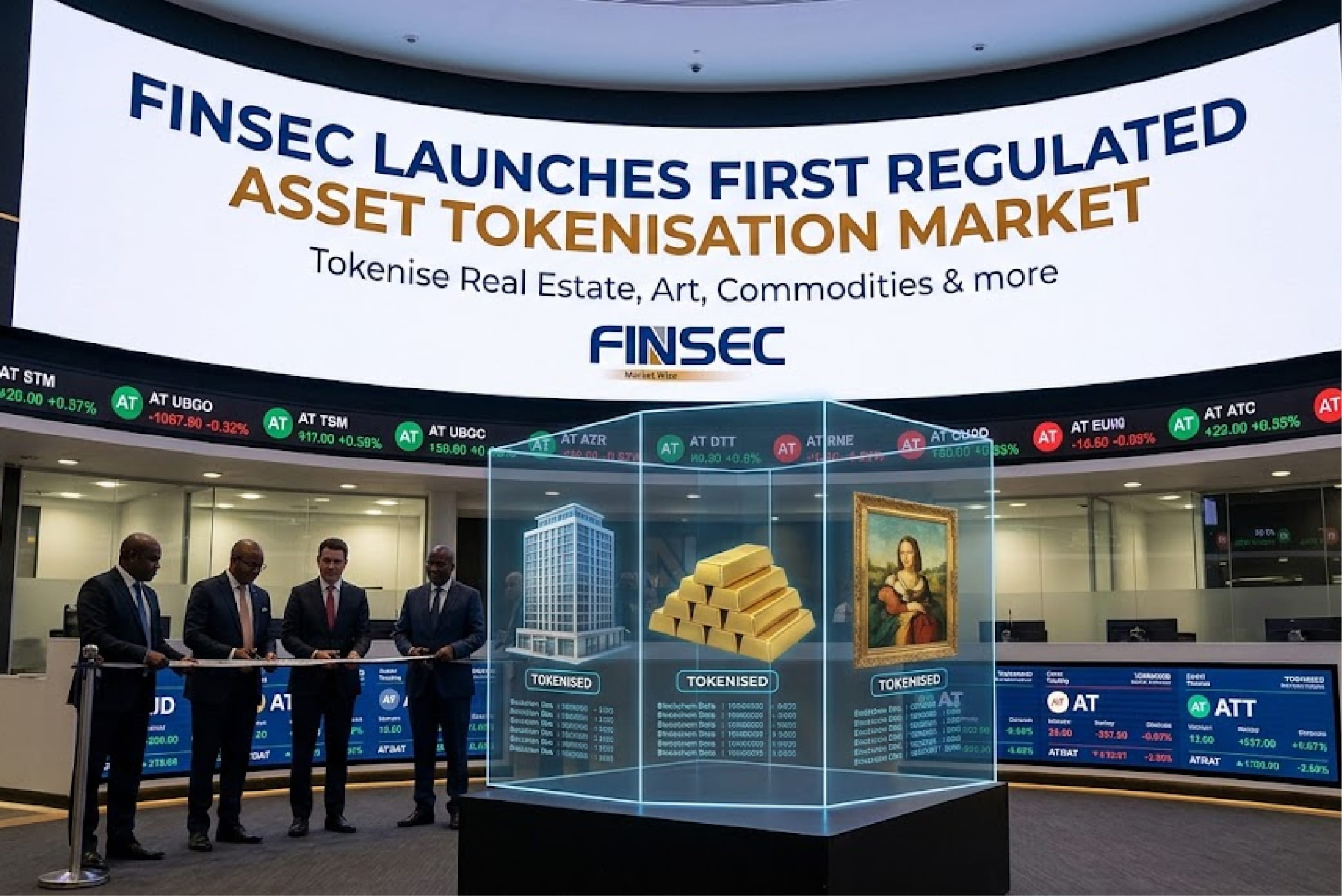
The Financial Securities Exchange (FINSEC) has officially received regulatory approval from the Securities and Exchange Commission of Zimbabwe (SECZim) to launch the nation’s first Asset Tokenisation Market. Operating under the Commission’s regulatory sandbox framework, this milestone establishes FINSEC as the first regulated market operator in Zimbabwe to provide a supervised platform for the digital conversion of real-world assets.
Asset tokenisation involves converting the economic interests or rights of physical assets into digital tokens that can be traded on a regulated platform. FINSEC has clarified that, unlike cryptocurrencies, these tokens are fully backed by identifiable underlying assets and function within established legal and custodial frameworks. The initiative will initially focus on property—specifically income-generating and development property—with potential expansion into other productive sectors.
The new market utilizes blockchain-enabled infrastructure to manage the entire lifecycle of these assets, including their issuance, trading, settlement, and custody. To ensure investor protection and transparency, the platform integrates smart contracts and automated compliance controls, providing real-time oversight for regulators. Each asset offering will be supported by independent valuations and asset verification to maintain market integrity.
Key features of this new market include:
• Fractional Ownership: Lowering investment thresholds to broaden access for smaller investors.
• Regulated Secondary Trading: Providing liquidity for traditionally illiquid assets.
• Enhanced Security: Utilizing escrow-based settlement and the strict segregation of investor funds.
• Rigorous Compliance: Maintaining full Know Your Customer (KYC) and Anti-Money Laundering (AML) standards.
This initiative is expected to strengthen Zimbabwe’s capital markets by unlocking capital from illiquid assets and providing alternative funding channels for property developers. By fostering responsible financial innovation, FINSEC aims to broaden investment opportunities across the country’s economic landscape.
Would you like me to draft a follow-up piece explaining the specific differences between these asset-backed tokens and standard cryptocurrencies?